
Today's best fishing in Port Townsend: 7 AM to 10 AM
This page is full of real data to show you what you can see with ReelCaster in Port Townsend.
Today's best fishing in Port Townsend: 7 AM to 10 AM
Updated today
What's biting now near Port Townsend: Coho
Coho fishing at Cape George looks good today.
ReelCaster scores every hour at Cape George from 0 to 100, reading the tide, current, wind and weather for Coho. The higher the score, the better your odds. Green means go.
Pro is free for 7 days: all 14 days, full catch reports and text alerts for Cape George.
 Start free trial
Every spot is scored for today, out of 100. Green is worth the trip, amber is fair, red is slow.
The next 14 days in Port Townsend
Data from: ECMWF + GFS + BlueCasterTwo weeks ahead
Most forecasts stop at the weekend. This one runs a full 14 days, so you can pick the day before you book the time off.
One number, out of 100
The best score anything in Port Townsend reaches that day. Green is good, amber is fair, red is slow, and you can read it from across the room.
11,760 scores behind it
35 spots, every hour of every day, out to 14. This row is the best of them.
Hour by hour today at Cape George
All times PDTOne real spot
A city has no tide or wind of its own, so this is Cape George, the most fished mark in Port Townsend, scored for Coho Salmon.
Six readings, one clock
Tide, current, wind, sea, air and sky, all lined up on the same hour, so you can see what is actually driving the score.
Currents, not just tides
Modelled flow for the water off Port Townsend, so you can see slack coming before you leave the dock.
What others are saying about ReelCaster Pro
The spots people actually fish in Port Townsend
29 more on the mapA year of catch reports
The order here is how much each mark actually gets fished, not today's guess. The busiest water in Port Townsend comes first.
Today's number too
Beside each name is the best score that spot reaches today, so you can weigh a proven mark against a good forecast.
Every mark has a page
Its own chart, its own species and its own rules, worked out the same way as everything above.
- 89Cape GeorgeKnown markBest 7 AM–10 AM · Early flood · Flat · Rock reef
- 89Kalset PointKnown markBest 7 AM–10 AM · Late flood · Flat · Rock reef
- 89Contractors PointKnown markBest 7 AM–10 AM · Late flood · Flat · Rock reef
- 89Skunk IslandKnown markBest 7 AM–10 AM · Low slack · Flat · Rock reef
- 89Mill PointKnown markBest 7 AM–10 AM · Late flood · Flat · Rock reef
- 89Basalt PointKnown markBest 7 AM–10 AM · Early ebb · Flat · Rock reef
Every spot we score in Port Townsend
Bathymetry: NONNA-10 + NRCanReal charted seabed
Depth soundings, not a stock map. The banks, reefs and drop-offs are where you can see them.
35 marks, all scored
Every spot we cover around Port Townsend, each one carrying its own number for today.
Point at any of them
The name, how busy a mark it is, and the tide, sea and seabed at its best hour.
Create custom spots
Our full model on your custom private spots.
- Drop a pinAnywhere on the water. The ledge you found, the bay nobody talks about.
- Name itYour name for it, not ours. It stays private to your account.
- Choose speciesPick what you fish there, and it starts scoring from the next run.
What you can keep in Port Townsend today
- Coho SalmonKeep2 a dayOpen at all 32 spots we cover
- HalibutKeep1 a dayOpen at all 33 spots we cover
- Chinook SalmonReleaseCatch and release at all 35 spots we cover
- LingcodClosedShut at all 35 spots we cover
- Copper RockfishClosedShut at all 18 spots we cover
- Black RockfishClosedShut at all 17 spots we cover
- Dungeness CrabClosedShut at all 3 spots we cover
Rules differ between marine areas and change in season. Check WDFW for the marine area you are fishing before you keep anything.
That was one day. Pro opens the next fourteen.
Every spot on this map, hour by hour, two weeks out, with alerts when your water crosses the score you set.
$0 today, then $33 USD a year, which is $2.75 a month. Card required, cancel any time.
When to fish Port Townsend
Each row is shaded against that species' own best month here, so a dark cell means a good month for that fish rather than a comparison between them.
| Species | January | February | March | April | May | June | July | August | September | October | November | December |
|---|---|---|---|---|---|---|---|---|---|---|---|---|
| Chinook Salmon | ||||||||||||
| Coho Salmon | ||||||||||||
| Halibut | ||||||||||||
| Lingcod | ||||||||||||
| Copper Rockfish | ||||||||||||
| Black Rockfish | ||||||||||||
| Dungeness Crab |
Chinook Salmon: January poor, February fair, March fair, April fair, May good, June peak, July peak, August excellent, September poor, October poor, November poor, December poor. Coho Salmon: January none, February none, March none, April none, May poor, June excellent, July peak, August peak, September peak, October poor, November none, December none. Halibut: January none, February poor, March excellent, April peak, May peak, June peak, July peak, August fair, September poor, October poor, November none, December none. Lingcod: January good, February fair, March fair, April excellent, May good, June fair, July fair, August fair, September fair, October fair, November fair, December fair. Copper Rockfish: January fair, February fair, March fair, April fair, May good, June good, July good, August excellent, September good, October fair, November fair, December fair. Black Rockfish: January fair, February fair, March fair, April good, May good, June excellent, July excellent, August excellent, September good, October fair, November fair, December fair. Dungeness Crab: January fair, February fair, March fair, April good, May excellent, June good, July excellent, August good, September fair, October fair, November fair, December fair.
- Chinook Salmon. Port Townsend sits on the migratory highway of Admiralty Inlet, so Chinook peak sharply July–August as mature summer-run fish (Fraser, Skagit, and Puget Sound stocks) stage and transit toward natal rivers. A modest winter presence reflects resident 'blackmouth' feeder Chinook holding in the area from late fall through spring, with a spring dip as those immature fish thin out before the summer run builds.
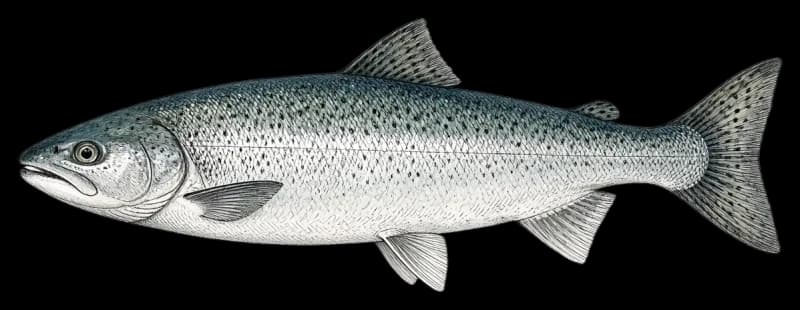
- Coho Salmon. Port Townsend coho are absent through winter and early spring, with feeder/resident 'blackmouth-style' immature coho building slowly through summer as they feed in the eastern Strait of Juan de Fuca. The dominant peak is the returning adult fall run migrating through Admiralty Inlet from mid-August through September, tapering sharply by mid-October as fish push into rivers to spawn.
- Halibut. Pacific halibut migrate onto shallower feeding grounds in the Strait of Juan de Fuca near Port Townsend as water warms, peaking late spring through early summer (May–June) when adults are actively feeding after their winter offshore spawning migration. Abundance tapers through late summer and fall as fish move back to deeper offshore waters, with lowest local presence in winter when spawning occurs in deep continental slope waters outside the inland waters.
- Lingcod. Lingcod are resident, non-migratory ambush predators present in Port Townsend's rocky reefs and channels year-round, so abundance never drops to zero. The clear late-winter/early-spring peak (Feb–Apr) reflects nest-guarding males concentrating on shallow rocky structure during the spawning and egg-guarding season, making them locally more abundant and catchable before dispersing back to deeper water in summer.
- Copper Rockfish. Copper rockfish are non-migratory, long-lived resident groundfish that stay on the same rocky reefs and structure in the Port Townsend area year-round, so abundance is broadly flat near baseline. The modest summer-into-early-fall bump reflects warmer water pushing fish shallower and more concentrated on nearshore structure, plus juvenile recruits from spring/summer parturition adding to counts, while winter shows a slight dip as fish disperse deeper.
- Black Rockfish. Black rockfish are resident, non-migratory reef dwellers in Port Townsend waters year-round, so abundance stays relatively flat with no true absences. A gentle summer-to-early-fall peak (July–September) reflects warmer water, active feeding, and shallower nearshore concentration, while cooler winter months see fish holding deeper and less densely aggregated.
- Dungeness Crab. Dungeness crab are present year-round in Port Townsend waters, but biological abundance of legal-size hard-shell males peaks in mid-to-late summer (weeks 15-22) after winter growth and before the late-summer molt. Abundance dips slightly in late summer/early fall (weeks 33-36) when many crabs are soft-shelled and recovering post-molt, then stabilizes near baseline through winter.
Before you go
Water around Port Townsend falls into 3 areas, and the rules can differ between them. Washington Department of Fish and Wildlife sets them.
- 6 6 — East Juan de Fuca Strait
- 7 7 — San Juan Islands
- 9 9 — Admiralty Inlet
Saltwater fishing licence
Washington Department of Fish and Wildlife · 2026-27
Annual, Resident, 16 to 69: $40.71
Puget Sound Dungeness crab $11.89, required to drop a pot in Puget Sound, on top of a shellfish licence.
A saltwater licence does not cover shellfish. The combination licence covers both and works out cheaper than buying them apart.
Fishing Port Townsend
Port Townsend sits at the northeastern tip of the Quimper Peninsula, where Admiralty Inlet meets the eastern edge of the Strait of Juan de Fuca. Its 36 fishing spots span exposed headlands and current-swept points, tide rips over submerged humps, and sheltered pockets tucked closer to shore. Chinook Salmon lead the summer fishery with a peak from June through August, followed by Coho Salmon holding strong from June into September, while Lingcod fill the spring window from March through May and Pacific Halibut run March through July. Anglers targeting Chinook here rely on mooching through the rips off the inlet's headlands. The heart of the calendar falls across late spring and summer, when salmon, halibut, and lingcod overlap across these waters.