Today's best fishing in Bamfield: 8 AM to 11 AM
This page is full of real data to show you what you can see with ReelCaster in Bamfield.
Today's best fishing in Bamfield: 8 AM to 11 AM
Updated today
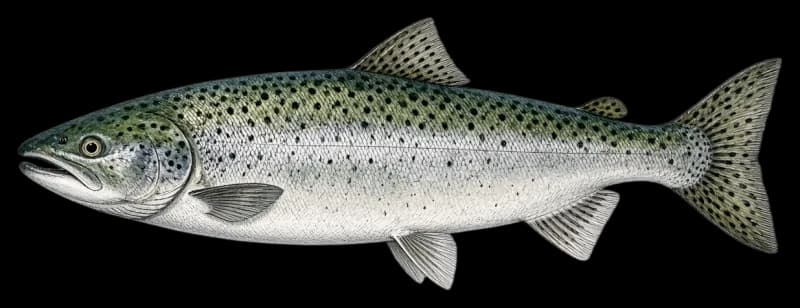
What's biting now around Bamfield: Chinook
Chinook fishing at Bamfield Inlet / Mouth looks good today.
ReelCaster scores every hour at Bamfield Inlet / Mouth from 0 to 100, reading the tide, current, wind and weather for Chinook. The higher the score, the better your odds. Green means go.
Pro is free for 7 days: all 14 days, full catch reports and text alerts for Bamfield Inlet / Mouth.
 Start free trial
Each number is today's best score out of 100 at that spot. The card walks the most-fished spots.
Bamfield report
2026-10-18Chinook Salmon is the story around Bamfield this week
The next 14 days in Bamfield
Data from: ECMWF + GFS + BlueCasterTwo weeks ahead
Most forecasts stop at the weekend. This one runs a full 14 days, so you can pick the day before you book the time off.
One number, out of 100
The best score anything in Bamfield reaches that day. Green is good, amber is fair, red is slow, and you can read it from across the room.
12,096 scores behind it
36 spots, every hour of every day, out to 14. This row is the best of them.
Hour by hour today at Bamfield Inlet / Mouth
All times PDTOne real spot
A city has no tide or wind of its own, so this is Bamfield Inlet / Mouth, the most fished spot in Bamfield, scored for Chinook Salmon.
Six readings, one clock
Tide, current, wind, sea, air and sky, all lined up on the same hour, so you can see what is actually driving the score.
Currents, not just tides
Modelled flow for the water off Bamfield, so you can see slack coming before you leave the dock.
The spots people actually fish in Bamfield
30 more on the mapA year of catch reports
The order here is how much each mark actually gets fished, not today's guess. The busiest water in Bamfield comes first.
Today's number too
Beside each name is the best score that spot reaches today, so you can weigh a proven mark against a good forecast.
Every spot has a page
Its own chart, its own species and its own rules, worked out the same way as everything above.
- 77Bamfield Inlet / MouthRegularly fishedBest 8 AM–11 AM · Early flood · Lumpy · Mixed bottom
- 86Kirby PointRegularly fishedBest 8 AM–11 AM · Early flood · Lumpy · Rock reef
- 86Cree IslandRegularly fishedBest 8 AM–11 AM · Mid flood · Rough · Rock reef
- 83Cape BealeRegularly fishedBest 8 AM–11 AM · Early flood · Rough · Rock reef
- 87Swale RockRegularly fishedBest 8 AM–11 AM · Mid flood · Chop · Rock reef
- 86Meares BluffKnown spotBest 8 AM–11 AM · Mid flood · Lumpy · Rock reef
Every spot we score in Bamfield
Bathymetry: NONNA-10 + NRCanReal charted seabed
Depth soundings, not a stock map. The banks, reefs and drop-offs are where you can see them.
36 spots, all scored
Every spot we cover around Bamfield, each one carrying its own number for today.
Point at any of them
The name, how busy a mark it is, and the tide, sea and seabed at its best hour.
Create custom spots
Our full model on your custom private spots.
- Drop a pinAnywhere on the water. The ledge you found, the bay nobody talks about.
- Name itYour name for it, not ours. It stays private to your account.
- Choose speciesPick what you fish there, and it starts scoring from the next run.
What you can keep in Bamfield today
- Chinook SalmonKeep2 a day · min 45 cmOpen at all 33 spots we cover
- Coho SalmonKeep2 a day · min 30 cmOpen at all 35 spots we cover
- HalibutKeep2 a dayOpen at all 25 spots we cover
- LingcodKeep3 a day · min 65 cmOpen at all 33 spots we cover
- Rockfish (Aggregate)Keep3 a dayOpen at all 25 spots we cover
- SurfperchKeep8 a dayOpen at all 7 spots we cover
- Flounder / Sole (Flatfish)Keep8 a dayOpen at all 5 spots we cover
- HerringKeep20 a dayOpen at all 1 spot we cover
Rules differ between PFMAs and change in season. Check DFO for the PFMA you are fishing before you keep anything.
That was one day. Pro opens the next fourteen.
Every spot on this map, hour by hour, two weeks out, with alerts when your water crosses the score you set.
$0 today, then $33 CAD a year, which is $2.75 a month. Card required, cancel any time.
When to fish Bamfield
Each row is shaded against that species' own best month here, so a dark cell means a good month for that fish rather than a comparison between them.
| Species | January | February | March | April | May | June | July | August | September | October | November | December |
|---|---|---|---|---|---|---|---|---|---|---|---|---|
| Chinook Salmon | ||||||||||||
| Coho Salmon | ||||||||||||
| Halibut | ||||||||||||
| Lingcod | ||||||||||||
| Rockfish (Aggregate) | ||||||||||||
| Surfperch | ||||||||||||
| Flounder / Sole (Flatfish) | ||||||||||||
| Herring |
Chinook Salmon: January poor, February fair, March good, April good, May excellent, June peak, July peak, August peak, September poor, October none, November poor, December poor. Coho Salmon: January none, February none, March none, April poor, May good, June peak, July peak, August peak, September peak, October poor, November none, December none. Halibut: January none, February poor, March good, April peak, May peak, June peak, July peak, August peak, September good, October fair, November none, December none. Lingcod: January fair, February good, March good, April good, May fair, June fair, July good, August good, September good, October fair, November fair, December fair. Rockfish (Aggregate): January fair, February fair, March fair, April fair, May good, June good, July excellent, August excellent, September good, October good, November fair, December fair. Surfperch: January fair, February good, March fair, April fair, May good, June excellent, July excellent, August good, September fair, October fair, November fair, December fair. Flounder / Sole (Flatfish): January poor, February fair, March fair, April good, May excellent, June excellent, July excellent, August excellent, September good, October fair, November fair, December poor. Herring: January excellent, February peak, March peak, April good, May poor, June poor, July poor, August poor, September poor, October poor, November poor, December fair.
- Chinook Salmon. Bamfield sits on the outer West Coast Vancouver Island migratory highway, so feeder (winter) Chinook provide a steady low-to-moderate presence through winter and spring. The dominant peak is the summer offshore migration of maturing Chinook staging along Barkley Sound (late June through August) bound for Fraser, Columbia, and Puget Sound rivers, tapering sharply through September as fish move inshore to natal streams.
- Coho Salmon. Bamfield coho are dominated by the summer-fall run, building through July as ocean-feeding fish stage off Barkley Sound and peaking sharply mid-August to early September (weeks 31-34) before fish push into rivers and thin out by October. A modest spring bump reflects early feeder/juvenile coho moving into nearshore waters through May-June, with near-absence in winter when returns have spawned and new cohorts are still small.
- Halibut. Pacific Halibut off Bamfield migrate to deeper offshore banks to spawn in winter, leaving nearshore waters sparse December–March. They move back onto shallower feeding grounds from spring, peaking in late spring/early summer and again in late summer/early fall as they fatten before returning offshore.
- Lingcod. Lingcod are resident, non-migratory reef dwellers present in Bamfield's waters year-round, so abundance never hits zero. The late-winter/early-spring peak (Feb–Apr) reflects nest-guarding males concentrated in shallow rocky structure during spawning, and the late-summer peak (Aug–Sep) reflects strong feeding activity and mature fish moving onto reefs in warmer productive water.
- Rockfish (Aggregate). Rockfish are non-migratory, long-lived residents of Bamfield's rocky reefs and remain biologically present year-round, so the curve stays broad with only gentle seasonal variation. Slight summer elevation reflects warmer water pushing fish shallower and more active feeding/aggregation on the reefs from late spring through early fall, with modest winter troughs as cooler temperatures reduce activity and some deeper dispersal.
- Surfperch. Surfperch are resident year-round in Bamfield's surf zones and rocky shorelines, so abundance never drops to zero. The strongest peak is late spring/early summer (May–July) when gravid females aggregate in shallow beaches and eelgrass to give live birth, with a milder secondary bump in late summer/early fall as young-of-year recruit into the surf zone.
- Flounder / Sole (Flatfish). Flatfish are resident year-round in Bamfield's sandy bays and estuary flats, so the curve stays broad and never hits zero. Abundance rises through spring and peaks in summer (late May–Aug) as fish move onto warmer shallow flats to feed, with a modest late-summer/early-fall bump before dispersing to deeper water in the cold, stormy winter.
- Herring. Pacific herring in Barkley Sound near Bamfield concentrate massively during the late-winter/early-spring spawn (roughly late February through April), when dense schools move inshore to deposit eggs on kelp and eelgrass, producing the sharp peak. Outside the spawn, herring disperse offshore and into deeper feeding grounds, so summer through fall abundance in nearshore waters is lower and relatively flat as juveniles and post-spawn adults filter through.
Before you go
Water around Bamfield falls into 11 areas, and the rules can differ between them. Fisheries and Oceans Canada sets them.
- 20-1
- 23-4
- 23-5
- 23-6
- 23-7
- 23-8
- 121-2
- 123-1
- 123-3
- 123-5
- 123-8
Tidal Waters Sport Fishing Licence
Fisheries and Oceans Canada · 2026-27
Annual, Canadian resident, 16 to 64: $25.86
Salmon Conservation Stamp $7.39, required to keep any salmon. Releasing does not need it.
This is the federal tidal licence. Fishing fresh water in BC needs a separate provincial licence, and one does not cover the other.
Fishing Bamfield
Bamfield sits on the eastern edge of Barkley Sound on the west coast of Vancouver Island, with access to sheltered inlets and channels as well as the exposed offshore banks of the outer coast. The fishery centers on Chinook Salmon, which peak from May through August, and Coho Salmon, which run from May into September, alongside strong bottom fishing for Rockfish, Lingcod, and Pacific Halibut through the spring and summer months. Its 30 spots range from the protected inside waters near the inlet mouth and inshore islets to the deeper, current-swept offshore banks that draw anglers targeting halibut and salmon. Trolling carries the Chinook fishery across much of the season, while the rocky reefs and outer structure hold rockfish and lingcod from late winter into fall. The bulk of the fishing runs from spring through early autumn, when the salmon and bottom species overlap.
Get out early. The northwest wind builds most summer afternoons, so the run out past Cape Beale and down toward Kirby Point is a dawn job, and by early afternoon you want to be back inside Trevor Channel. Work the tide lines off Aguilar Point on the flood, cut plug herring mooched down 60 to 120 feet along the drop-offs. Halibut sit better on the slack, spreader bar hard on the bottom. When the fog settles in, hug the kelp edges and jig the shallow reefs for lingcod.
Common questions about Bamfield
›What is the best time of year to fish Bamfield?
Late spring through early fall is the strongest stretch overall. Chinook build from March and hit their high point from June through August as maturing fish stage along Barkley Sound, while coho run hot from mid-August into September before pushing toward rivers like the Somass. Halibut are at their best from April through August on the coastal banks, so a summer trip lets you stack salmon and bottomfish in the same day.
›What fish can you catch in Bamfield, and where do they hold?
Chinook and coho salmon are the headline targets, moving through the outer waters and staging in Barkley Sound on the West Coast Vancouver Island migratory route. Halibut hold on the offshore banks such as Swiftsure and La Perouse, where they feed on herring and other baitfish. Lingcod and rockfish are resident on the rocky reefs and kelp edges year round, and anglers also pick up cabezon, kelp greenling and the occasional chum, with albacore tuna well offshore.
›What techniques work best for salmon and bottomfish in Bamfield?
Trolling is the workhorse for Chinook and coho along the offshore migration lanes and around the mouth of Barkley Sound, with mooching and live bait productive when fish are holding on bait balls. Bucktailing is a classic surface presentation for coho once schools are staging in late summer. For lingcod, rockfish and halibut, drift jigging, bottom fishing and spreader bar rigs over reefs and gravel banks are the standard approach.
›Can you fish Bamfield from shore, or do you need a boat?
Rocky headlands and kelp edges hold resident rockfish, kelp greenling and cabezon within reach of casting jigs and bait from accessible shoreline, and lingcod sit on the same structure. The salmon fishing, however, is built around trolling the outer migratory lanes and the staging water of Barkley Sound, so a boat opens up far more of it. Halibut are effectively a boat fishery because the productive ground sits out on the coastal banks.
›Is the water off Bamfield rough, and what conditions should I plan around?
Bamfield sits on the exposed outer coast of Vancouver Island, so the offshore banks and the entrance to Barkley Sound are open to Pacific swell and afternoon wind. Halibut trips out to grounds like Swiftsure and La Perouse are long open water runs best left to settled mornings and a well found boat. When the outside is blown out, the sheltered reef and kelp water inside the sound still fishes for lingcod and rockfish.
›When is the best time to target lingcod near Bamfield?
Lingcod are resident reef fish and never fully leave, so there is something to catch in every month. Fishing is best in late winter and early spring when mature fish move onto shallow rocky structure and males guard nests, and again from midsummer into September during a strong feeding period on the reefs. Autumn tends to be slower as fish disperse into deeper, less concentrated water.